 Storytella
AI Video Generation for Filmmakers: Complete Guide (2026)
How AI is changing what's possible for solo filmmakers, content creators, and complete beginners — and the tools making it real today.
If you have a story to tell but no film crew, no studio budget, and no post-production team — AI video generation was built for you. In the past two years, AI filmmaking tools have moved from experimental novelties to genuinely capable platforms that take your idea from script to final cut. In this guide, you'll learn how AI video generation works, what it can do for filmmakers of every level, and how platforms like Storytella.ai are making it possible to create real films without a traditional crew.
What Is AI Video Generation?
AI video generation is the use of artificial intelligence to create video content — scenes, characters, dialogue, visual style, and pacing — from written prompts, scripts, or uploaded assets. Instead of hiring a director of photography, building sets, and coordinating a cast, you describe your vision and the AI renders it visually.
This is not the same as simple video editing software with a few smart filters. Modern AI filmmaking platforms can:
- Generate cinematic scenes from a text prompt or screenplay
- Maintain visual consistency of characters across multiple shots
- Apply specific artistic styles to an entire film
- Produce voiceovers, sound design, and music to match the mood
- Handle post-production tasks that would otherwise take days
The result is a complete filmmaking pipeline compressed into a single platform — accessible to anyone with a creative idea.
Why AI Video Generation Matters for Filmmakers
Traditional filmmaking is expensive, slow, and logistically demanding. A short indie film can cost tens of thousands of dollars before a single frame is edited. For most creators, the gap between an idea and a finished film has always been a gap in resources, not talent.
AI video generation closes that gap.
Here is what changes when AI handles the production layer:
| Traditional Filmmaking | AI-Assisted Filmmaking |
|---|---|
| Film crew required | Solo creator can produce alone |
| Days or weeks of shooting | Generate scenes in hours |
| Expensive post-production | Built-in rendering and editing |
| Reshoots cost time and money | Regenerate a scene instantly |
| Consistent casting is challenging | AI maintains character consistency |
| Geographic limitations | Create any setting from a prompt |
For indie filmmakers, this means more creative control with fewer resources. For content creators, it means faster turnaround on higher-quality video. For beginners, it means a real entry point into filmmaking without years of technical training.
Who Can Use AI Video Generation?
AI video generation is not just for one type of filmmaker. It is genuinely useful across different creative profiles.
Independent and Indie Filmmakers
Indie filmmakers often have strong creative vision but limited budgets. AI video generation lets them prototype scenes quickly, test visual styles before committing to a direction, and produce polished short films without assembling a full crew. It is especially useful for proof-of-concept reels when pitching to investors or distributors.
Content Creators and YouTubers
Content creators need volume and consistency. AI video generation shortens the production cycle dramatically, making it possible to publish narrative-driven video content regularly without burning out on logistics. Whether you are making short films, docuseries, or branded storytelling content, AI tools bring the production quality up and the production time down.
Beginners with No Filmmaking Experience
One of the biggest barriers to filmmaking has always been the technical learning curve. AI filmmaking platforms like Storytella.ai are designed to remove that barrier entirely. If you can describe a scene in plain language, you can start making films. The AI handles composition, lighting, character movement, and editing decisions — so you can focus on the story.
How AI Video Generation Works: Step by Step
Understanding the workflow helps you get better results and plan your project realistically.
Step 1: Start with Your Idea or Script
The process begins with your story. Most AI filmmaking platforms accept a written prompt, a scene description, or a full screenplay. The more specific your input, the better the output. Instead of writing "a chase scene in a city," write "a fast-paced foot chase through a rain-soaked Tokyo market at night, neon reflections on wet pavement, high tension."
Step 2: Set Your Visual Style
AI filmmaking platforms let you define the look of your film — cinematic realism, animation, noir, sci-fi, documentary style, and more. This style is applied consistently across your entire project so each scene feels like it belongs to the same film.
Step 3: Generate Scenes
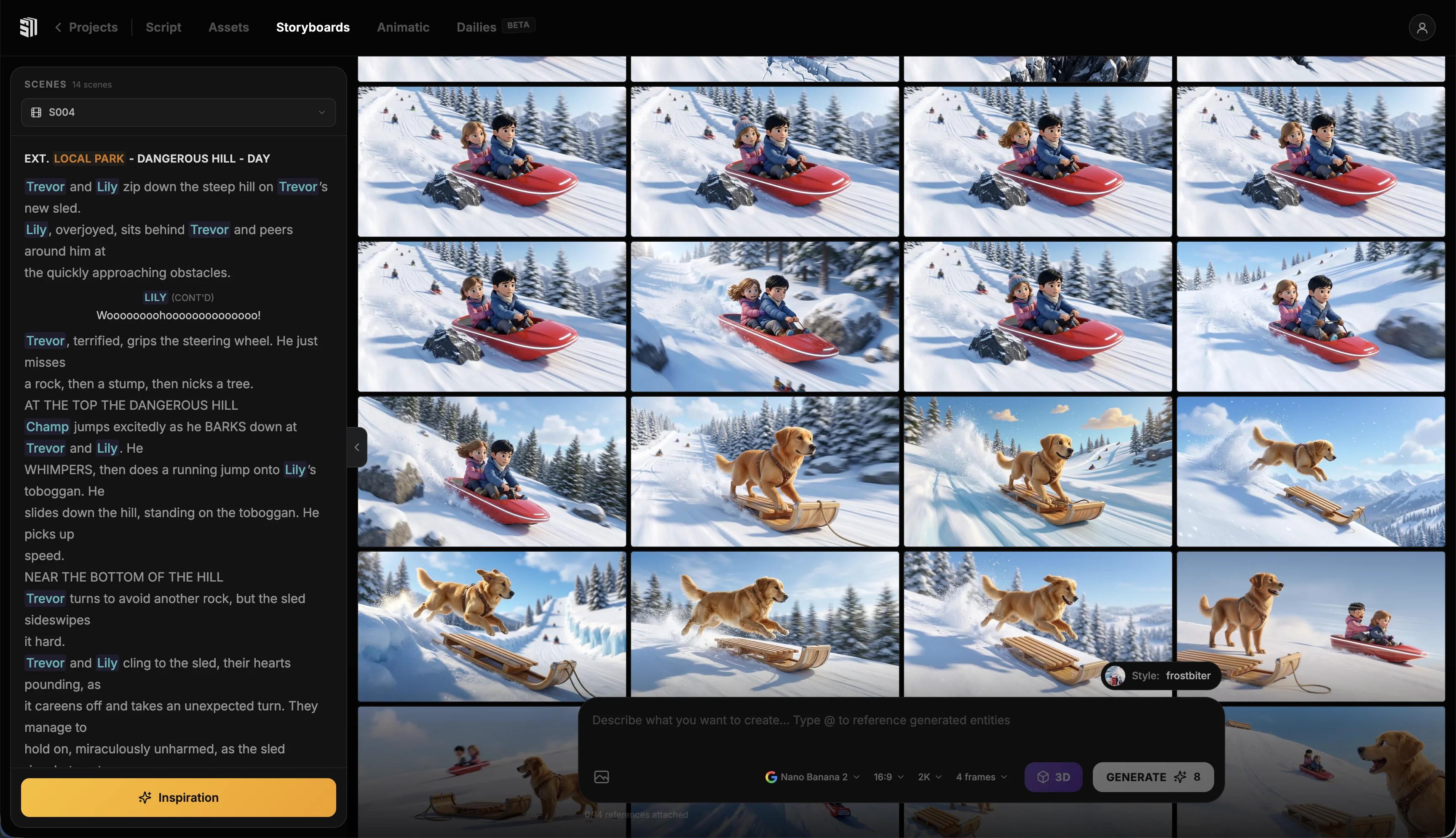
Once your script and style are set, the AI generates your scenes. On platforms like Storytella.ai, you move from idea to final cut in one unified environment. Characters are rendered consistently, environments are built from your descriptions, and the AI handles the visual storytelling decisions a director would normally make on set.
Step 4: Refine and Edit
AI-generated scenes can be adjusted, regenerated, or refined. If a shot does not match your vision, you can change the prompt, tweak the style, or request a different angle. This iteration loop is one of the biggest advantages over traditional production — there are no reshoots, no additional crew costs, and no scheduling conflicts.
Step 5: Add Audio
Great films need great sound. AI video generation platforms can add voiceovers, dialogue, ambient sound, music, and sound effects that match the tone of your scenes. Some platforms synthesize voices from your script automatically, while others allow you to upload recorded audio.
Step 6: Export Your Final Cut
When you are satisfied with the result, you export your finished film — ready to upload, distribute, or submit to festivals.
What to Look for in an AI Filmmaking Platform
Not all AI video generation tools are built for filmmakers. Some are designed for short social clips. Others focus on corporate presentations. If you are making real narrative films, these are the features that matter.
End-to-end workflow. Look for a platform that handles everything from script to final export in one place, rather than requiring you to jump between multiple tools.
Character consistency. One of the biggest challenges in AI filmmaking is keeping characters looking the same from scene to scene. A strong platform solves this problem by maintaining character identity throughout your entire project.
Style control. You should be able to set the visual tone of your film and have it applied consistently — not scene by scene, but across the whole production.
Quality of output. Test the platform with a short scene before committing. Look for cinematic framing, natural movement, and realistic rendering if that is the style you are going for.
Iteration speed. The ability to regenerate or adjust scenes quickly is critical. A platform that takes 30 minutes to render a single scene will slow your creative process significantly.
Storytella.ai is built with exactly these priorities — giving filmmakers, creators, and beginners a single platform to go from idea to final cut without a crew.
Common Mistakes Filmmakers Make with AI Video Tools
Getting started with AI video generation is straightforward. Getting great results takes a bit of practice. Here are the most common mistakes to avoid.
Vague prompts. The AI can only work with what you give it. Generic descriptions produce generic results. The more specific you are about setting, mood, character behaviour, and visual tone, the better your output.
Skipping the style setup. Jumping straight into scene generation without defining your visual style leads to inconsistent-looking films. Set your style first and lock it in before generating any scenes.
Trying to make everything perfect on the first generation. AI video generation is iterative. Your first version of a scene is a draft. Expect to refine it — that is part of the process, not a sign the tool is not working.
Ignoring audio. Many new AI filmmakers focus entirely on the visual output and underinvest in sound. Audio — dialogue, music, ambient sound — is 50% of the emotional impact of a film. Use the full audio tools your platform offers.
Treating AI as a replacement for story. AI handles production. You still need to write a compelling story. The technology is a powerful creative partner, not a substitute for narrative thinking.
Tips for Getting Better Results from AI Video Generation
These practical habits will improve your output from the start.
Write your script before you open the platform. A clear screenplay gives the AI more to work with and gives you a cleaner production process. Even a rough scene-by-scene outline helps.
Use visual references in your prompts. Reference cinematic styles or moods in your description — "wide-angle, golden hour, slow motion, reminiscent of a 1970s western" gives the AI much more direction than "outdoor scene, sunny."
Build scene by scene. Rather than generating the whole film at once, work through your scenes one by one. This gives you more control over each moment and makes it easier to spot and fix issues.
Review with the sound on. Always review your generated scenes with audio playing. Sometimes the visuals look right but the tone only becomes clear once the sound is layered in.
Publish your first film, even if it is short. The fastest way to improve is to complete a project and release it. A two-minute AI short film you finish and publish is worth more than a feature-length project you keep refining indefinitely.
FAQ
Do I need any filmmaking experience to use AI video generation?
No. Platforms like Storytella.ai are designed for creators at every level. If you can write a scene description or a script, you have everything you need to get started.
How long does it take to make an AI film?
It depends on the length and complexity of your project. A short two-to-five-minute film can be generated and refined in a matter of hours on a capable AI filmmaking platform. Longer projects naturally take more time, but the process is still dramatically faster than traditional production.
Is AI-generated film content good enough for festivals or distribution?
The quality of AI video generation has improved significantly. Short films made with AI tools have been accepted at film festivals and distributed online. The key is strong storytelling and careful refinement of your output — quality matters in AI filmmaking just as it does in traditional filmmaking.
Can I control how my characters look throughout the film?
Yes, on platforms that support character consistency. This is one of the most important features to check when choosing an AI filmmaking tool. Storytella.ai maintains character identity across scenes so your film has a coherent visual identity from start to finish.
Is AI video generation free to use?
Most serious AI filmmaking platforms offer a free trial or starter plan, with paid plans for longer films, higher quality output, or commercial use. Check each platform's pricing page for current details.
Will AI replace human filmmakers?
AI is a production tool, not a creative replacement. The story, the vision, and the emotional intelligence behind a great film still come from human creators. AI video generation removes the resource barrier so more human stories can be told — it does not remove the storyteller.
Conclusion
AI video generation has fundamentally changed what it means to make a film. The barriers that kept great stories untold — budgets, crews, equipment, technical expertise — no longer have to stop you. Whether you are an indie filmmaker with a feature idea, a content creator building a series, or a complete beginner with a story you have always wanted to tell, the tools exist today to bring it to life.
The best way to start is to start small. Write a scene. Set your style. Generate your first shot. Iterate until it feels right. Then move to the next scene.
Try Storytella.ai and go from idea to final cut — no crew required.
Your story awaits
The set is ready for you.
Turn your screenplay into stunning storyboards and animatics in minutes — not months. No drawing skills required.
Free to start · No credit card required · Cancel anytime